The Building Isn't the Savior
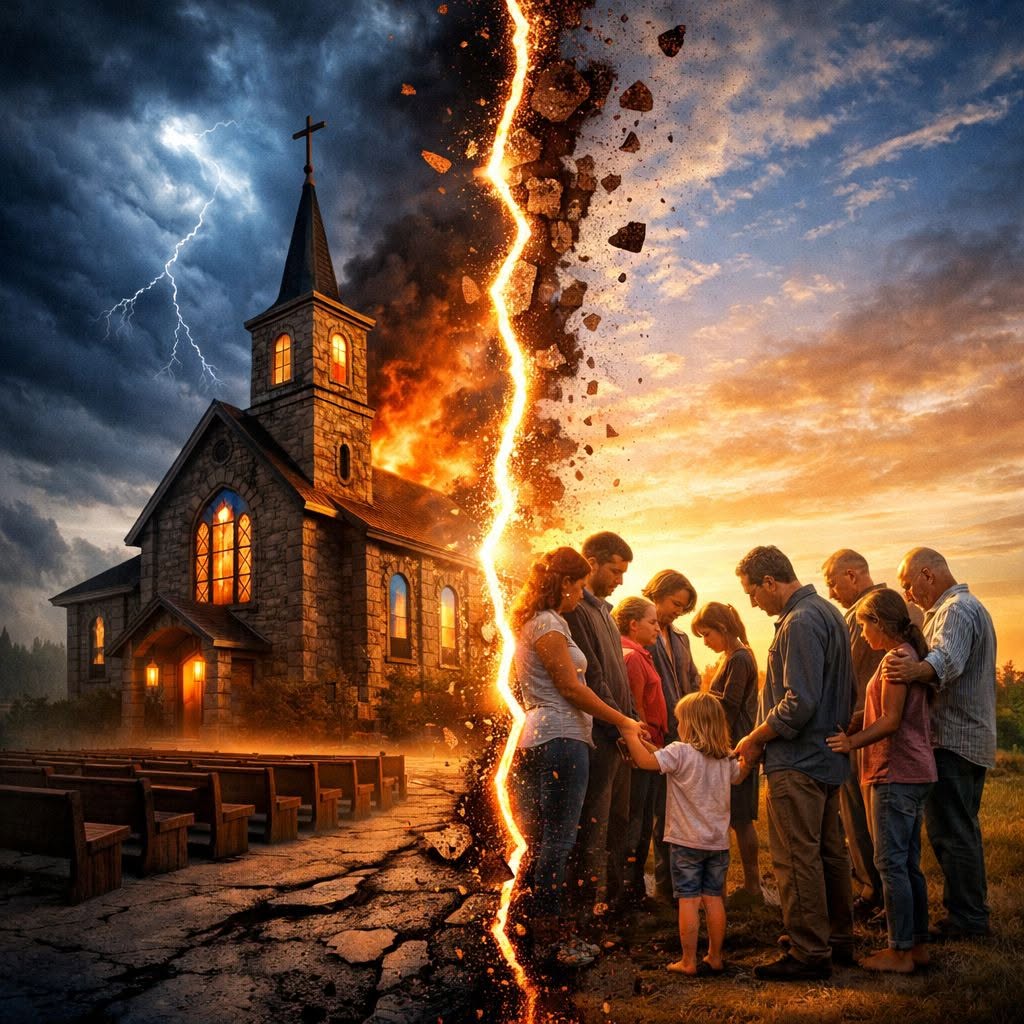
There's a quiet drift happening in modern Christianity — especially among people who know better. We say all the right things about the church being the people, not the place… and then we live like the opposite is true.
We protect buildings like they're sacred ground.
We mourn empty pews more than empty hearts.
We panic when the doors are closed but stay strangely calm when disciples stop growing.
Let's say it plainly, without soft edges:
We do not worship a church building. We worship the Savior. And confusing the two has done real damage.
When the Lights Go Out
Think about how people reacted when church buildings closed for a season.
Some said, "We can't worship without the building."
Others asked, "When do we get back to normal?"
Very few asked, "How do we keep being the church right now?"
That question exposes the problem.
The early church had no buildings, no budgets, no branded campuses — and somehow turned the world upside down. Meanwhile, we've got climate control, padded seats, and livestreams in HD… and we're nervous without a street address.
That should bother us.
A Pew Is Not a Position
For generations, we unintentionally taught this equation:
Faithful Christian = attends the building regularly
But Scripture never made that deal.
Jesus said, "Where two or three are gathered together in My name, I am there in the midst of them." (Matthew 18:20)
Notice what's missing. No building. No schedule. No stage.
The presence of Christ was never tied to square footage.
The Temple Was Replaced — And That Was the Point
Paul didn't mince words when he wrote, "Do you not know that you are the temple of God and that the Spirit of God dwells in you?" (1 Corinthians 3:16)
Not you all collectively when the doors are open. You.
That means the church is fully present in a hospital room, a living room, a prison cell, a kitchen table, and yes — even a parking lot.
If the church only exists when the building is unlocked, then we've reduced Christianity to a weekly event instead of a daily mission.
When the Building Becomes the Idol
Here's the uncomfortable truth no one likes to say out loud:
Sometimes we defend the building more fiercely than we defend the gospel.
We'll argue over carpet colors but stay silent about sin. We'll donate eagerly for renovations but hesitate to invest in evangelism. We'll fill committees to maintain property while neglecting people.
And sometimes it gets painfully personal.
A little old lady will have no problem chewing out a visitor for bringing a drink into the auditorium — or sitting in her seat — or not knowing the "rules" of the building — but somehow never finds the courage to ask about their soul.
That's not reverence. That's misplaced devotion.
Stephen called this out centuries ago when he said, "The Most High does not dwell in temples made with hands." (Acts 7:48)
That sermon got him killed — not because it was wrong, but because it was threatening. Truth still is.
The Church Didn't Start in a Building — and It Won't End There
The church began in homes (Acts 2:46). It grew in persecution. It thrived under pressure. It multiplied without meeting houses.
Buildings are tools. Good ones. Useful ones. Worth caring for.
But tools make terrible gods.
If the building burned down tomorrow, the church should still be alive, active, and dangerous to the kingdom of darkness.
If it isn't, then the problem was never the fire.
A Question Worth Sitting With
So here's the question that should linger long after you stop reading:
If the building disappeared… would the church you're part of still exist?
Not on paper. Not in memory. But in action.
Because we don't gather to worship a place. We gather because we worship a Person.
And He never lived in brick and mortar. He lives in His people.